
 Save
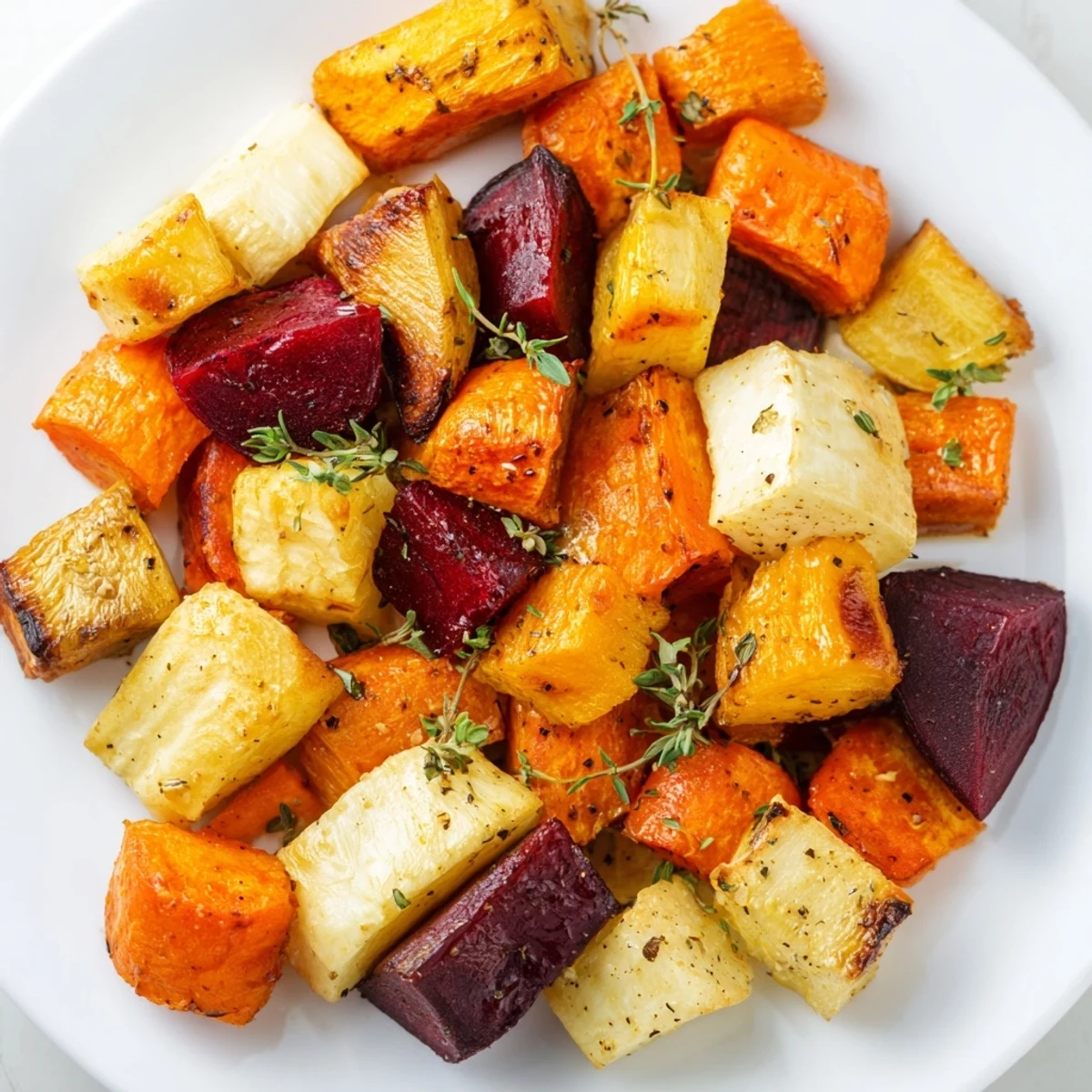
Save This dish features a colorful mix of carrots, parsnips, beets, and sweet potato, all coated in olive oil, fresh thyme, smashed garlic, sea salt, and black pepper. Roasted at a high temperature until golden and tender, the vegetables bring out their natural sweetness and earthy flavors. Simple preparation and easy cooking time make it a perfect complement for any main course or a standalone hearty offering, suitable for vegan and gluten-free dining.
There's something almost meditative about roasting vegetables—the way the kitchen fills with that golden, caramelized warmth while you're doing something so simple. I stumbled onto this combination on a chilly autumn evening when I opened my crisper and found a jumble of roots staring back at me, each one begging for rescue. What started as tossing whatever I had onto a pan turned into something I couldn't stop making, a dish that somehow tastes like comfort but feels elegant enough to serve to anyone.
I made this for a dinner party once and watched my friend who "doesn't really eat vegetables" go back for thirds, and honestly, it changed how I thought about cooking for picky eaters. That moment when someone realizes a simple roasted beet is actually delicious? That's the whole point of cooking.
Ingredients
- Carrots: Two large ones, chunked to the same size as everything else—uniformity matters here so they cook evenly without some pieces turning to mush.
- Parsnips: They get a bit sweeter and creamier than carrots, so don't skip them even if you've never cooked with them before.
- Beets: Use two medium ones—they'll stain your hands, but that deep earthiness is worth it, and the color is stunning.
- Sweet potato: One small one keeps things balanced; too much and it overpowers the other delicate flavors.
- Olive oil: Two tablespoons is enough to coat everything without making it greasy; use something you actually like the taste of.
- Fresh thyme: A tablespoon of leaves (or one teaspoon dried) adds an herbal note that makes people ask what your secret ingredient is.
- Garlic cloves: Three smashed cloves infuse everything with flavor without actually being in every bite if you remove them after roasting.
- Sea salt and black pepper: The usual half-teaspoon each—taste as you go because salt can vary depending on what you're serving this with.
Instructions
- Get your oven ready:
- Preheat to 425°F and line your baking sheet with parchment paper—this step saves you from scrubbing caramelized bits later, trust me.
- Prep the vegetables:
- Peel and cut everything into roughly one-inch chunks, trying to keep them uniform so nothing finishes cooking way before something else. It doesn't have to be perfect; just close enough.
- Make the coating:
- Throw all your vegetables in a bowl, then drizzle with olive oil and toss in the thyme, salt, pepper, and smashed garlic. Get your hands in there if you need to—feel the oil coating each piece, because that's what creates the golden crust you're after.
- Spread and roast:
- Lay everything out in a single layer on your sheet, leaving a bit of space between pieces so they roast instead of steam. Slide it into the oven and set a timer for about eighteen minutes to flip everything halfway through.
- Finish strong:
- After another eighteen to twenty minutes, the edges should be deep golden and you should be able to pierce the largest beet with a fork easily. Remove the garlic cloves if you prefer, though I sometimes leave them for people who want that concentrated garlic punch.
 Save
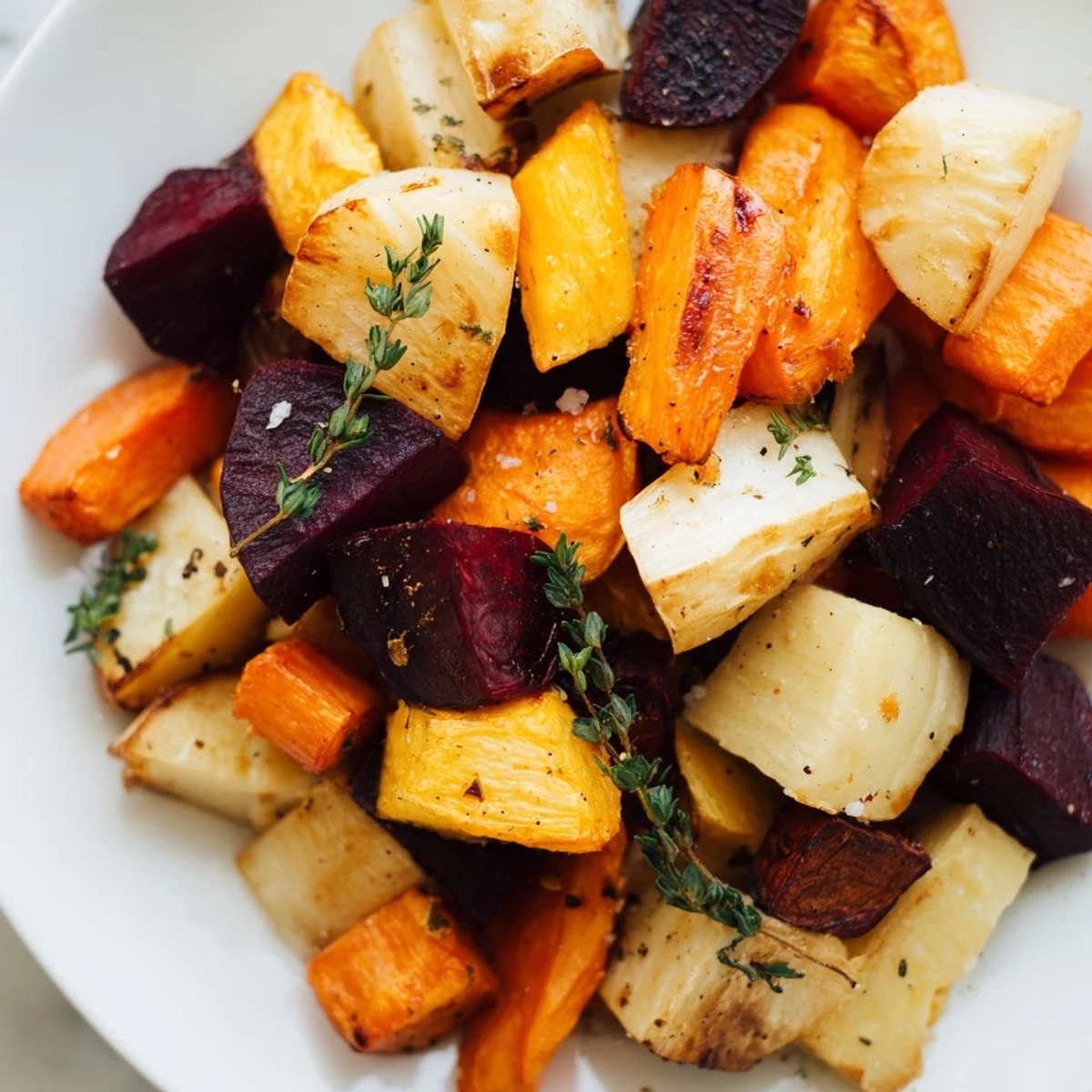
Save There's a moment, somewhere between thirty and forty minutes in, when the smell hits you—that deep, toasted sweetness mixing with thyme—and you realize that whatever you're serving this with is about to taste better because of this side dish. It stops being an afterthought and becomes the thing people actually remember.
Variations That Work
The beauty of this recipe is that it adapts to whatever you have in your produce drawer or farmer's market basket. Turnips and rutabaga are natural swaps—turnips stay a bit firmer and have a subtle bite, while rutabaga leans toward sweetness and almost melts at the edges. I've also thrown in cubed celery root for earthiness and small Brussels sprouts if I wanted something with texture that doesn't soften completely. The herb game can shift too; rosemary works brilliantly if you want something more piney, and a sprinkle of thyme mixed with oregano adds a Mediterranean angle that feels fresh and different.
Serving Suggestions
This dish genuinely works everywhere—alongside roasted chicken or fish, stirred into grain bowls, or piled on top of a simple green salad where the warmth wilts the leaves slightly and the sweetness balances the bitterness. I've even repurposed leftovers the next day by roasting them again with a little more oil until the edges get extra crispy and crunchy.
Storage and Make-Ahead Tips
These keep beautifully in the fridge for up to five days in an airtight container, and reheating them in a 350°F oven for ten minutes brings back some of that fresh-from-the-oven texture. You can also prep and cut all your vegetables the morning of if you're hosting, which takes away the last-minute scramble. If you're meal prepping, portion them out into containers so you have an instant side ready to grab all week.
- A drizzle of balsamic vinegar right before serving adds a subtle tang that nobody expects.
- Fresh thyme sprinkled on top just before serving looks beautiful and tastes fresher than if it's been roasting the whole time.
- Leftovers are incredible tossed with vinaigrette and eaten cold as a salad.
 Save
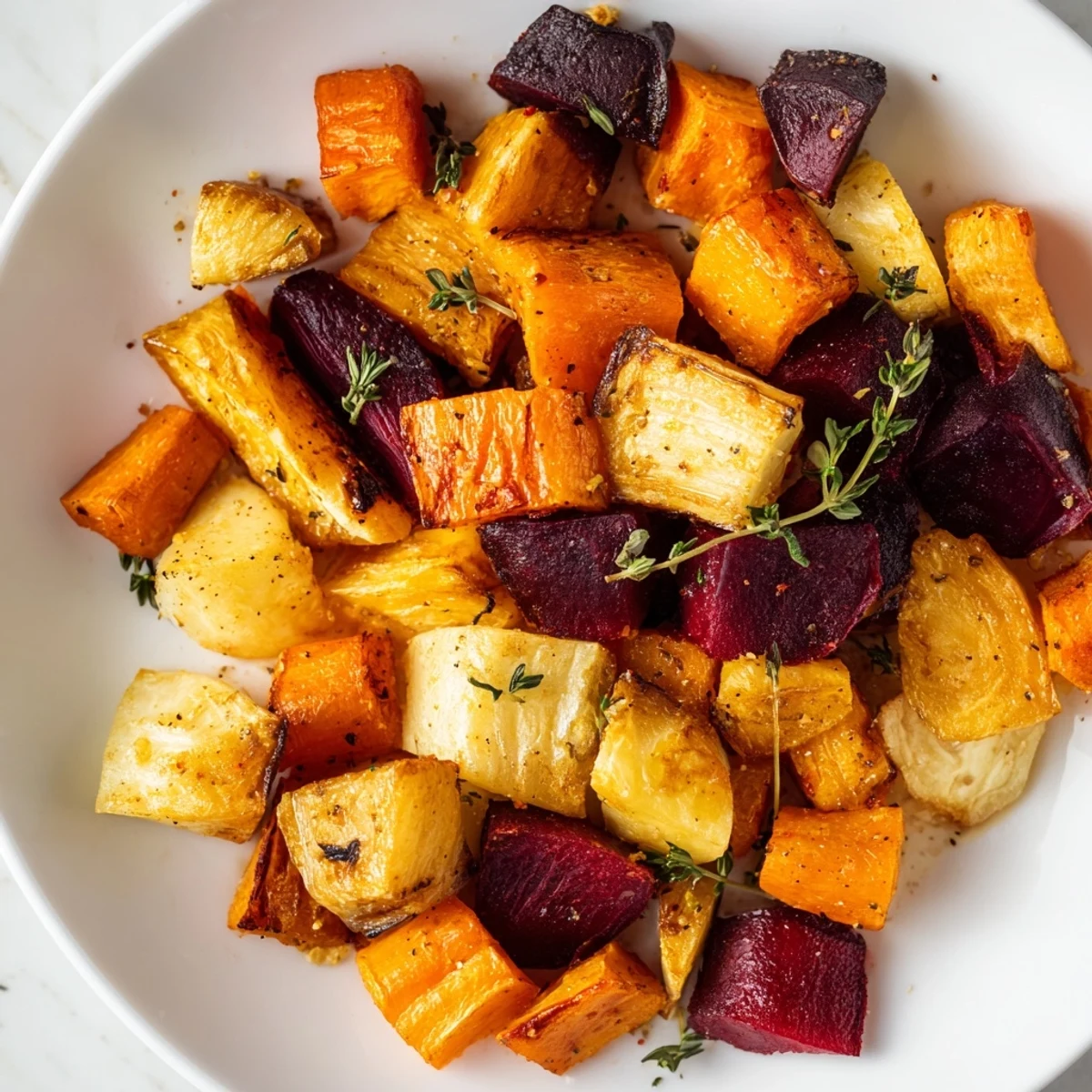
Save This recipe taught me that sometimes the simplest dishes are the ones that stay in regular rotation because they genuinely make people happy. It's the kind of side that quietly becomes essential.
Recipe FAQs
- → What root vegetables work best for roasting?
-
Carrots, parsnips, beets, and sweet potatoes roast beautifully, offering a balance of sweetness and earthiness.
- → How does thyme enhance the flavor?
-
Thyme adds a fragrant herbal note that complements and elevates the natural sweetness of the root vegetables.
- → Can garlic be left whole during roasting?
-
Smashed garlic cloves impart a subtle aroma and mellow flavor; you can remove them after roasting if preferred.
- → What is the ideal oven temperature for roasting these vegetables?
-
Roasting at 425°F (220°C) ensures a tender inside with nicely caramelized edges.
- → How can I add a touch of sweetness without using honey?
-
Natural sweetness develops through caramelization during roasting, and optional root veggies like sweet potatoes help enhance it without extra sweeteners.